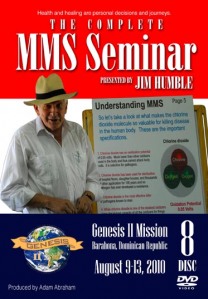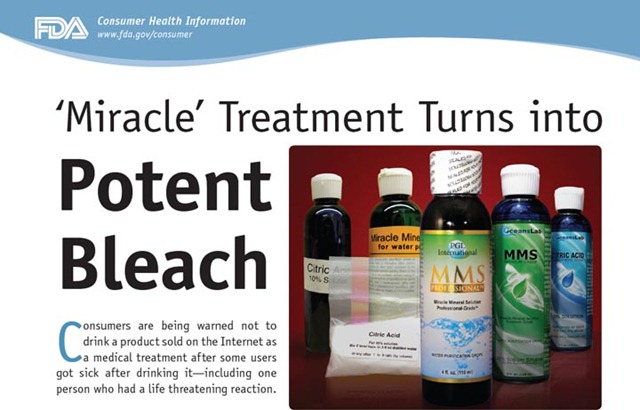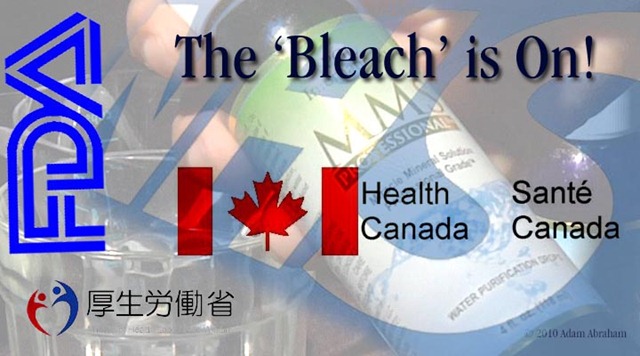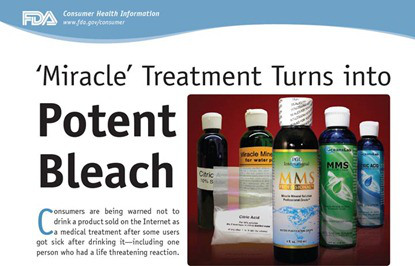
The FDA is going to great lengths to dissuade the public on MMS.
History is always in the making, and we’re part of it. The initial official response of public health agencies to MMS is hardly the last word, as their advisories run counter to the actual experience of so many who have already used it and speak from experience.
Used in appropriate, scaled down amounts, chlorine dioxide is not the harmful chemical that has been suggested. Indeed, there is great evidence that it can be even more invaluable as a disinfectant than it already has been for over 60 years. The agencies will either align their policies and positions on a truthful foundation, or be clearly seen as organizations that are at odds with their charters, and undeserving of the public’s trust.
The large population of people who have recently been introduced to MMS (Jim Humble’s “Master Miracle Supplement”), by way of alarmist warnings issued by the FDA, FSA (UK) and counterparts around the world, are going to naturally want to know what the hubbub was all about. They will want to know the truth. They will also determine whether they can expect the truth from public agencies, or otherwise.
Trying to ward the public off MMS actually increases interest, and creates a natural desire to understand why. Calling the product “bleach”, and attempting to create an aversion response in the process, is really weak. But then, that is probably the best that the agencies can do, given that their claims of harm are dubious, at best.
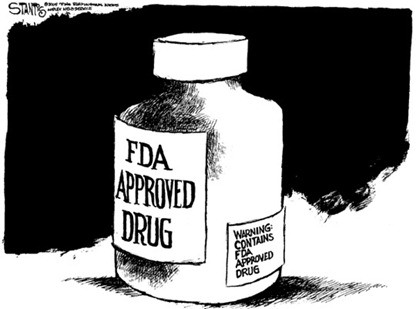
Considering the number of widely known toxic therapies that are not only approved by these agencies, but considered “go to” drugs that are administered each day, you have to wonder what caused MMS to gain such urgent treatment.
Could it be because the accounts of beneficial outcomes, which the agencies said were made by the sellers, but were actually made by MMS users, were actually true?
The agencies suggest that claims of recoveries from a wide range of pathologies are untrue, because said pathologies themselves are “unrelated.” But what if they are related?
What if it is, like Louis Pasteur is reported to have said before his death, that it is not “the germ,” but the terrain?
I mean no disrespect to those who feel that Pasteur has been targeted by scientific revisionists who are positing a new interpretation of familiar, and sometimes sacred conceptual cows.
Our escalating dance with disease and unnecessary death, is in part a byproduct of our futile and unquestioned “war” with microbial life, whose only purpose is to protect and perpetuate life. It is a memo we have yet to get. Predominant efforts to find “cures” revolve around the perpetuation of this microbial war. Yet, the weapons themselves are synthetic, un-living, foreign, alien, and disruptive to the human inner ecosphere.
Therefore, a new spate of “MMS naysayers” have risen, resolute in the belief that simply referring to MMS as “bleach” will be enough to stimulate a public aversion to the product. They may even be conceding that those who know the truth about MMS are not going to be persuaded, but will attempt to use fear or the threat of force to keep the uninformed, disinterested, and the more “obedient” sector at bay.
There will be those, however, who really want to know the truth. “Is MMS, the product — that these agencies have joined together in unison to denounce — really dangerous?
Perhaps this series of selected comments, quoted from a document whose source I’ll reveal at the end, will be helpful. It is a comparison of the disinfection properties of chlorine dioxide and chlorine, the result of numerous published scientific research that said naysayers suggest has never been done.
I’ll offer my own comments at the end.
Disinfection Efficacy
Several investigations have been made to determine the germicidal efficiency of chlorine dioxide since its introduction in 1944, as a drinking water disinfectant. Most of the investigations were carried out as a comparison to chlorine; some studies have compared chlorine dioxide and ozone. Chloride dioxide is a more effective disinfectant than chlorine but is less effective than ozone.
- poliovirus (Scarpino et al., 1979)
- Naegleria gruberi cysts (Chen et al., 1984)
- E. coli (Chen et al., 1984) (Ridenour and Ingols, 1947)
- Cryptosporidium (Le Chevallier et al., 1997)
- Giardia (Liyanage et al., 1997)
Bacteria Inactivation
Quantitative data were published as early as the 1940s demonstrating the efficacy of chlorine dioxide as a bactericide. In general, chlorine dioxide has been determined to be equal to or superior to chlorine on a mass-dose basis. It was demonstrated that even in the presence of suspended matter, chlorine dioxide was effective against E. coli and Bacillus anthracoides at dosages in the range of 1 to 5 mg/L (Trakhtman, 1949). Ridenour and Armbruster (1949) reported that an orthotolidine arsenite (OTA) chlorine dioxide residual of less than 1 mg/L was effective against Eberthella typhosa, Shigella dysenteriae, and Salmonella paratyphi B. Under similar pH and temperature slightly greater OTA residuals were required for the inactivation of Pseudomonas aeruginosa and Staphylococcus aureus.
Chlorine dioxide was shown to be more effective than chlorine at inactivating B. subtilis, B. mesentericus, and B. megatherium spores (Ridenour et al., 1949). Moreover, chlorine dioxide was shown to be just as effective or more effective than chlorine at inactivating Salmonella typhosa and S. paratyphi (Bedulivich et al., 1954).
In the early 1960s several important contributions were made by Bernarde et al. (1967a and 1967b). Chlorine dioxide was found to be more effective than chlorine at disinfecting sewage effluent and the rate of inactivation was found to be rapid.
Protozoa Inactivation
The disinfection efficiency of chlorine dioxide has been shown to be equal to or greater than chlorine for Giardia inactivation.
Both Chen et al. (1985) and Sproul et al. (1983) have investigated the inactivation of Naegleria gruberi cysts by chlorine dioxide. Both studies concluded that chlorine dioxide is an excellent disinfectant against cysts and that chlorine dioxide is better than or equal to chlorine in terms of inactivation.
Virus Inactivation
Chlorine dioxide has been shown to be an effective viricide. Laboratory studies have shown that inactivation efficiency improves when viruses are in a single state rather than clumped. It was reported in 1946 that chlorine dioxide inactivated Poliomyelitis (Ridenour and Ingols, 1946). This investigation also showed that chlorine dioxide and free chlorine yielded similar results. Other studies have verified these findings for poliovirus 1 (Cronier et al., 1978) and Coxsackie virus A9 (Scarpino, 1979). At greater than neutral pHs (where hypochlorite ion is the predominant species) chlorine dioxide has been found to be superior to chlorine in the inactivation of numerous viruses such as echovirus 7, coxsackie virus B3, and sendaivirus (Smith and McVey, 1973). Sobsey (1998) determined CT values based on a study of Hepatitis A virus, strain HM 175. The study found 4-log inactivation levels are obtainable at CT values of less than 35 at 5°C and less than 10 at a temperature of 25°C.
CT Values
Chlorine dioxide is regarded as a strong disinfectant that is effective at inactivating bacterial, viral, and protozoan pathogens. CT values for Giardia and virus inactivation are shown in Figure 4-5 and Figure 4-6, respectively (AWWA, 1991).
CT values shown in Figure 4-5 are based on disinfection studies using in vitro excystation of Giardia muris. Average CT values for 2 log removal were extrapolated using first order kinetics and multiplied by a safety factor of 1.5 to obtain the CT values for other log removal CT values. Due to the limited amount of data available at pH values other than 7, the same CT values are used for all pHs. Because chlorine dioxide is more effective at a pH 9 than at a pH of 7, the CT values shown in Figure 4-5 are more conservative for higher pHs than for lower pHs. A lower safety factor was used to derive the CT values for chlorine dioxide than for ozone due to the fact that the chlorine dioxide values were derived from Giardia muris studies, which are more resistant than Giardia lamblia.
Organic DBPs Produced by Chlorine Dioxide
Chlorine dioxide generally produces few organic DBPs. However, Singer (1992) noted that the formation of non-halogenated organic byproducts of chlorine dioxide has not been adequately researched, and expected that chlorine dioxide will produce the same types of oxidation byproducts that are produced through ozonation. The application of chlorine dioxide does not produce THMs and produces only a small amount of total organic halide (TOX) (Werdehoff and Singer, 1987).
A study was conducted in 1994 by Richardson et al., to identify semivolatile, organic DBPs produced by chlorine dioxide treatment in drinking water. Samples were taken from a pilot plant in Evansville,
Indiana that included the following treatment variations:
- Aqueous chlorine dioxide;
- Aqueous chlorine dioxide, ferrous chloride, (FeCl2), chlorine (Cl2), and dual media filtration (sand and anthracite);
- Gaseous chlorine dioxide; and
- Gaseous chlorine dioxide, ferrous chloride (FeCl2), chlorine (Cl2), and dual media filtration (sand and anthracite).
Using multispectral identification techniques, more than 40 different DBPs (many at sub-nanogram/L [ng/L] levels) were identified including carboxylic acids and maleic anhydrides isolated from XAD™ concentrates, some of which may be regulated in the Stage 2 DBPR. THMs were not found after chlorine dioxide was added to the water; however, THMs did show up during subsequent chlorination.
Now one thing is clear by the terminology, this was not a consumer report. The document is the EPA Guidance Manual, and these excerpts were from Chapter 4, “Alternative Disinfectants and Oxidants,” which is 41 pages in length. Published in 1999, this document publishes official guidelines for water treatment.
What the EPA document says about chlorine dioxide compared to chlorine is enough to raise even larger questions, and come to some conclusions on one’s own.
Now what did it say?
It didn’t call chlorine dioxide a “bleach”. Of course, if they did, they would have had to acknowledge that chlorine is one too.
But then, they weren’t trying to dissuade. This was an actual objective, unbiased guideline.
As an aside, given how many hundreds of millions of people are exposed to chlorine, day in and day out, you wonder how they decided to base their MMS alert on the idea that a bleach was being used?
Being a “bleach” is not the issue in this document.
The excerpts indicate several important points:
- Chlorine dioxide is effective at “inactivating” the following:
- Poliomyelitis
- Naegleria gruberi cysts
- E. coli
- Cryptosporidium
- Giardia muris
- Bacillus anthracoides
- Eberthella typhosa,
- Shigella dysenteriae,
- Salmonella paratyphi B.
- Pseudomonas aeruginosa
- Staphylococcus aureus
- B. subtilis, B. mesentericus, and B. megatherium spores
- Salmonella typhosa
- Coxsackie virus A9
- Echovirus 7
- Coxsackie virus B3
- Sendaivirus
- Hepatitis A virus, strain HM 175
- Protozoan pathogens
- Chlorine dioxide is a superior disinfectant to chlorine.
- Unlike chlorine, chlorine dioxide, produces NO THM’s.
The EPA appears to be confirming what Jim Humble and the tens of thousands of people have reported about chlorine dioxide. It is a pathogen inactivator extraordinaire. MMS, on the other hand, has been demeaned by the FDA, et al, and other detractors, as an industrial strength, bleach. Yet, MMS is not chlorine dioxide, but simply a means of generating it in significantly reduced quantities.
The EPA’s manual is clearly not about the personal application of chlorine dioxide. However, it is about the internal application of chlorine dioxide, just as chlorine is taken internally as the predominant disinfectant now. Since the products are used for water treatment — which would be “consumed” by the public — a comparison was natural. The results clearly show that chlorine dioxide is superior to chlorine as a disinfectant. The reality today shows that the best option healthwise, isn’t necessarily what the public is going to get.
The EPA document also confirms that chlorine dioxide is effective at inactivating a long list of bacteria and viruses (and more). These microorganisms and many more, figure prominently in the onset and treatment of disease. In addition a long list of expensive, discrete pharmaceutical drugs are presently being administered for various infections, vaccinations, and chronic conditions. This lends credibility to the “anecdotal” claims from a wide range of people about amazing health improvements after using MMS. In this era where success in health care reform is defined by the ability to pay the increase in costs, and not in the ability to help people heal, how many of these drugs might be shown to be expendable by MMS? Not to mention the expense, what about the lives that would be saved?
Perhaps the FDA’s real issue is with people choosing their own methods of disinfection. Perhaps if the agency had chosen the disinfectant, it would be okay. But then, the government has given agencies the opportunity to allow a predominant disinfectant to emerge, and it wasn’t chlorine dioxide. Maybe it is because the chlorine dioxide would inactivate the fluoride that they are also so fond of, whereas chlorine combines and forms new toxic chemistry.
While we might imagine that the agencies would see this problem and fix it on their own, it is more apparent that the agency is unlikely to change what it thinks “ain’t broken.”
It is apparent that we can’t trust authorities to choose the best approach over the least costly. Yet, when we do our own research and demonstrate the benefits to ourselves, we can trust them to take an adversarial, alarmist stand.
But while the inactivation of viruses and bacteria appear to be the primary litmus test of both products’ efficacy, something else is being overlooked. I believe that it is chlorine dioxide’s effect on low energy, inorganic, synthetic, non-living stuff that can’t be metabolized by the body, and is subsequently stored.
As I mentioned in an earlier article1, trihalomethanes, or THM’s are known carcinogens. Last time I checked, a “cure” for cancer was still believed to be sufficiently not yet achieved, that the fund raising effort continues at full, if not accelerated pace. Yet, have any studies been published with outcomes measured to see what would happen if we stopped exposing people to THMs daily, for years and decades at a time?
In spite of the clear superiority of chlorine dioxide, and the fact that, according to the EPA, between 700 and 900 cities currently use it as their disinfectant of choice, the human health continues to take a back seat to costs.
I’m not pointing the finger at chlorine either, as it is part of nature. We can’t have salt without chlorine binding with sodium. We can’t live without salt (full spectrum, that is), in proper measure.
My point in bringing this up is to show what the EPA has reported, which indicates that an extensive amount of research has gone into the nature of chlorine dioxide dating back several decades. The research confirms what Jim Humble has said about this naturally occurring (which we could call “public domain”) chemical. It is not a drug. It is a chlorine ion, an essential element, bound to with two atoms of oxygen, which is also an essential element.
It is amazing to see the new wave of indignant “scientists” and “professionals” who have attempted to add the weight of the initials, either in front of, or beyond their names, to give greater credibility to the FDA’s and company’s warnings about chlorine dioxide. None of them have done their homework. Or if they did, then they are clearly trying to keep the public from seeing a far greater harm that could be hiding in plain sight.
1 Wolf to Henhouse: “Just Say ‘No’ to MMS!”