



Gulf Oil Cleanup: Where’s Bioremediation When We NEED It? And Why Isn’t It Here?

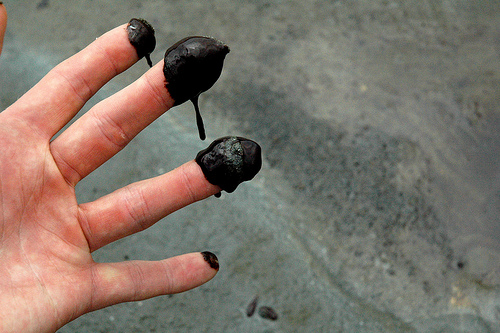
Oil tipped fingers

Oil is on everyone's hands

The situation in the Gulf of Mexico has become personal. How well we respond to this very RESOLVABLE situation is a litmus test for EVERYTHING, not just how we do business, but our education system as well.

I have driven over 1,000 miles in the past week, first to meet and interview three prominent microbiologists at the ASM Conference in San Diego. ASM is the American Society for Microbiology. Microbiology is the area of science that would be expected to offer the most useful advice on how to remediate an oil spill. That is, if an understanding of microbial dynamics was sufficiently taught in colleges and universities. The term bioremediation refers to the use of life forms, in this case, microscopic life forms, referred variously as microbes, enzymes, and bacteria, to literally consume the contaminant which, in the case of the Gulf of Mexico, is crude oil.

The advantages of bioremediation are manifold, beginning with the fact that as the toxic contaminant is broken down, the results of the degradation is non-toxic. In other words, the oxygen depleted marine environment once again becomes oxygen rich, which supports the recolonization of the smallest creatures that constitute the base of the food chain. Chemical dispersants and surfactants (detergents) retard this recolonization, thereby extending the timeline in the recovery. Depending on the size of the contamination, this could turn years in recovery time, as some of the microbiologists suggested, into decades. Bioremediation can demonstrate a restoration of the ability to support microscopic life in periods that range from several weeks, to days. Of course, the extent of the contamination is a factor.

While many microbiologists appear to be aware of bioremediation, the understanding is not clear enough to have made it a primary or preferred protocol when “oil hits the fan.” In fact, even in documented cases of bioremediation successes, the professional opinion was that the protocol is inconclusive. Why? Because even though the oil disappeared, they didn’t know where it went. I’m referring to records of the first bioremediation effort that was performed in the Gulf of Mexico, some 20 years ago, in June of 1990, after the Mega Borg spill.

This is excerpted from a report of the Mega Borg bioremediation effort, as recorded in a journal published by the ASM.

“In terms of bioremediation strategies, the On-Scene Coordinator granted permission to conduct a field trial 1 day after the accident occurred. Two portions of the slick were treated with a product containing Alpha BioSea (108). A 16-hectare patch of slick located about 5 km from the Mega Borg was treated 7 days after the accident with 50 kg of microbial agent (Alpha BioSea) which had been rehydrated with seawater. The product was applied with the standard shipboard fire-hose system. The equipment and treatment preparation time of approximately 1 h (108) indicates that very little rehydration time was given to the product. Four traverses of the treatment area were made over a 30-min period.

“Following large-scale application of the product at sea, visual observations indicated that the treated oil changed from a continuous film of brown oil and sheen to discrete areas of mottled brown and yellow material and sheen. An aerial reconnaissance 16 h after treatment was not able to detect oil in the area. However, there is considerable uncertainty about the fate of the treated oil (108).

“The measurements on water samples from the treated slick showed no evidence of acute toxicity to marine life or significantly elevated levels of nutrients or total hydrocarbons. Attempts to assess the effect of the microbial agent from measurements of oil content in the emulsion samples were unsuccessful because of sample variability. By 8 h after treatment, the slick had largely broken up and dissipated. Although little change was observed in the control area, conclusive evidence of bioremediation effectiveness was not achieved because of limitations in the sampling strategy and the chemical evidence obtained.

“This study demonstrated the potential problems with the application of bioremediation products at sea, including difficulties with uniform product application, representative sampling, and uncertainties about the ultimate fate of the oil. The short periods over which monitoring is often possible may not be sufficient to validate the presence and activity of oil-degrading bacteria or the effectiveness of bioremediation treatments. The observed visual effects may well have been caused by physical or chemical processes such as surfactant action associated with the treatment.” (SOURCE: “Field Evaluations of Marine Oil Spill Bioremediation” Microbiological Reviews, June 1996)

In this field trial in an area of open sea about 40 acres in size, roughly 100 lbs of microbial agent was used (re-hydrated with seawater), which took about 1 hour to complete. 16 hours later, there was no sign of a slick, NOR was there any toxicity. It is apparent that the slick, and the toxicity had been persistent for days prior to the test, but now they were gone. Instead of demonstrating some encouragement over the success and seeing areas of new research, the writer cites “uncertainties about the ultimate fate of the oil” as reasons to be wary of bioremediation. I guess we could say that you can take a microbiologist to the sea and show the wonder of nature at work, but you can’t make him see it.”

We know why the microbiologist, and the incident writer with the U.S. Coast Guard, who basically wrote that bioremediation was tried, but was inconclusive, came to their conclusions twenty years ago. Oil spill remediation products, which were themselves petrochemical-based, were becoming a market sector themselves. Microbes could be collected, but they could not be patented. Instead of doing what was best for the seas, the chemical companies looked out for themselves. We’re paying the price of this depraved indifference to both marine and human life, to this very day.

After seeing how the microbiologists were thinking, I drove from San Diego, back to Port Hueneme, to meet again with Joseph Johnson, the young researcher who placed the PHOTONIC Water transformation device on the strawberry field, and has witnessed and explained many remarkable changes that have occurred. I had been there just one week prior. In addition to doing the follow-up on the strawberry field’s progress, Joseph had set up a bioremediation experiment in a small seawater aquarium. He was using a product that restores mineral balance to the water, combined with a culture of oil-consuming microbes that he had isolated.

These microbes have the ability to multiply at astronomical rates. A single microbe can become billions and even trillions in a day’s time. They will continue to multiply as long as there is a food supply; “food” in this case being oil. When the food supply is consumed, they stop multiplying (perhaps their purpose is served), and they are consumed by other microbes, which are consumed by ever higher lifeforms. This is the mystery that the microbiologist did not fathom, and instead of seeing a promising area for new research, the writer cast a pall of doubt (under the veil of “uncertainty”) about the entire process.

When I left Port Hueneme a week prior, we were both bummed that the experiment didn’t appear to have worked. The one-ounce combination of gas and motor oil that Joseph applied to the water did in fact, kill the aquatic life in the tank. Applying the remediant to the surface of the water didn’t save them. I left on a somber note, although the news from the strawberry field had been wonderful. Joseph and I talked about the oil spill and remediation strategies for my radio show, Talk For Food. While we were not ambivalent, we hadn’t seen the result that we hoped for.

Three days later, as I finished up producing the radio show for that week, which included our conversation, I received notice of a voice mail message. It was Joseph, saying he thought I’d be happy to know that the water in the tank was now pristine, and that it once again supported microbial life. In fact, they were thriving more now than they were before the “oil spill.”

The experiment did work. Bioremediation did work.

So it made sense to go back to Port Hueneme last week, and see the clear water for myself, allow Joseph to see and hear what the microbiologists were saying, and get his take on it all.

I’ll share more of that here, and on video.
Oil Remediation: A NON-TOXIC Approach

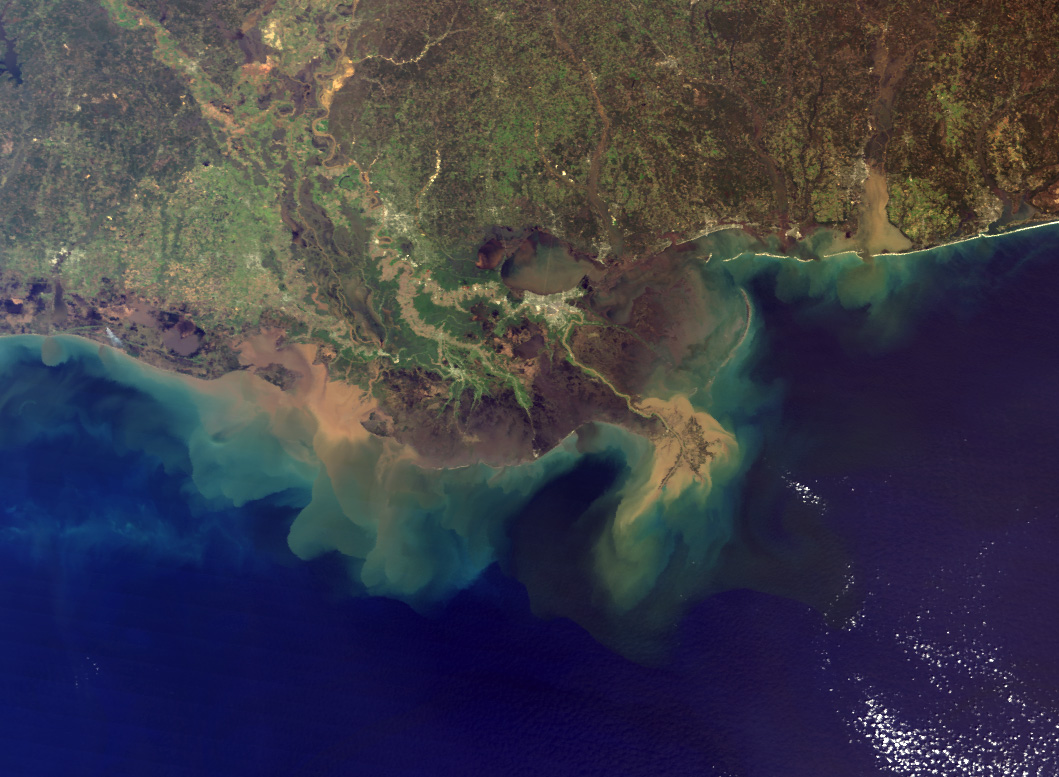
From here it still looks beautiful, but to marine life, it's deadly.

From here it still looks beautiful, but to marine life, it's deadly.

The Gulf oil spill of 2010 can become the latest biggest disaster in recent history, or our greatest blessing. We get to choose. Most writers, pundits, and commentators will tell you about the disaster and how bad it’s going to be. Here you’ll hear about the blessing. I’ll tell you now; if we follow the line of remediation that is being followed right now, the latest biggest disaster will be ours. Bigger ones will follow. However, if we choose a different path, which I firmly believe enough people actually want to do, then we’ll reap benefits that heretofore we’ve only dared to dream of privately.

Without going into a lot of detail here, I’m simply going to take this opportunity to introduce two men who, together, represent the kind of thinking, along with the products and services to back it up, that can truly turn the Gulf Oil disaster into a hiccup that did no lasting harm. In addition, their remediation strategy would not the waters in the Gulf of Mexico from becoming a dead zone, it would return it to its LIFE SUSTAINING state.

The men are Jerry Bakke, who runs Organic Miracle, Inc., of Muskogee, OK, and Joseph Johnson, Chief Operating Officer of ABC Organics, Inc., of Port Hueneme, CA. You’ve met Joseph before in two of my recent videos on the effects that PHOTONIC water (www.photonicwater.com) transformation technology has had on one of Joseph’s client strawberry fields. I also had Joseph as a guest on a recent episode of my radio show, Talk For Food. He represents the kind of inquisitive original thinking that is too often missing on our college campuses these days, which too often stress conformity over originality.

Jerry Bakke, owns a large parcel of mineral rich land in the Southwest United States, soon discovered that, when prepared a certain way and applied to diseased land, plants, or waters, dramatic improvements tended to happen. Imagine the quandary a citrus grower with diseased trees might have. Do you cut it down, or nurse it to health? That is, if you can find out what’s wrong. How much time and money does it take to turn things around, especially when we turn to chemicals to try to solve the problem. Bakke witnessed, time and time again, problems going away and health returning when his products were mixed with water and sprayed on the target. Worked like a miracle, so the name Organic Miracle seemed appropriate.

Enter the Gulf oil spill.

We’re loading a living sea with more chemicals, killing off miles upon miles of marine life, apparently oblivious to the effect that this devastation will have on humanity. One video on Fox Business is asking the question whether the Gulf oil spill will kill future oil drilling. When that is the extent and depth of one’s world view, the world is in jeopardy. Fortunately, theirs is only one perspective.

I sat down recently with both Jerry Bakke and Joseph Johnson and asked them about their collaboration. Below is a video beginning. There’s far more to be said on this subject, some from these gentlemen, and from others. But we’ve got to begin seeing the life sustaining solution as the only viable solution to sustain life. As “bright” as we think we’ve become, until life enhancement becomes our focus rather than damage control, we merit low grades in our studies in the school of life.

Jerry Bakke’s site is: www.buildingabetterworldgreen.com

More about the blessing will follow.

The Strawberry Field Story Gets Even Better with PHOTONIC WATER

It seems almost too simple to suggest that a change in the state of the water that we use — drinking, bathing in, and growing our foods in — could dramatically impact our health, that is, until you learn more about water’s inherent properties, properties that are easy to dismiss if we’re not paying attention. And since much of the time, we’re not, we tend to pay an unnecessary price for our ignorance. Our health is just one unnecessary sacrifice that we make for water ignorance. Our planet may be another… although I’m not willing to concede that we won’t, or aren’t waking up.

Taking in water that is in its optimal state will have — not “may,” but will have — a positive effect on health. I visited a strawberry farm in late March that had installed a photonic water transformation device just 48 hours, and one watering before I arrived.

Six weeks later, the story gets even more remarkable.

One of the beauties of seeing how nature responds to the change that a product produces is to know its actual effect on life. If life is enhanced, then the product is, in fact, life enhancing, and will benefit all life forms. Alphabet organizations test, certify, and more importantly, approve a myriad of products and methods that are life threatening, and then tell the public that said products are okay. They oftentimes prevent the use of life enhancing products that they have not “certified.” We’ve reached a time when we need to know for ourselves, what enhances life, and then choose it whenever and wherever we can.

www.photonicwater.com

Looking for ‘Spill Relief’ in All the Wrong Places

As large and far-reaching as it is, the April 20 oil rig explosion in the Gulf of Mexico is but a microcosm of a larger tragedy that is playing out in front of our eyes, literally hiding in plain sight. And yet, if we wake up from our stupor and see the situation with fresh eyes and open minds, we have an opportunity to correct the hemorrhaging and restore health for hundreds of millions who may not call the Gulf home, but may be equally at risk.

Now a month into the quagmire, the devastation spreading with each passing second, BP Plc, dismisses advisories by the Environmental Protection Agency (EPA) to use less toxic chemical dispersants, claiming that Corexit “was the best and most appropriate choice at the time when the incident occurred, and that Corexit remains the best option for subsea application,” (See Wall Street Journal article.) in a May 20 letter to the EPA.

BP was instructed to provide the EPA with a list of alternatives, and if not used, reasons that they were declined. Corexit is on the list of approved dispersants, which again is part of the larger, yet unrecognized problem.

The problem is that toxic chemicals DO NOT and CANNOT remediate organic environments. Therefore, they WILL NOT work. In the case of the Gulf oil spill, they may make the environment look somewhat like it did before the explosion, but the result will be an ecological wasteland, unable to sustain life.

This is not only a problem in the Gulf. It is the same truth that applies to remediation of an entire encyclopedia of pathologies that humanity now labors to live under, while waiting for our “best and brightest” to come up with “cures.” This would be reason for hope, except that research and professional biases prefer to seek and approve chemical, i.e., pharmaceutical approaches, just like the EPA and BP Plc. As long as we play that game, humanity remains on a slippery slope to oblivion.

That being said, I’ll reiterate that chemical dispersants DO NOT truly REMEDIATE the environment in which they are deployed. Appearing to see where the current course is heading, the EPA is now petitioning BP to find less toxic alternatives to Corexit, but since they operate within the same mindset as the BP scientists, they aren’t mandating that the solution be non-toxic. It is very possible that they do not know such solutions even exist, right under our noses, and in plain sight.

Adding synthetic chemicals to the environment will only SLOW the ultimate and inevitable healing and restoration of the Gulf. Some of the articles written on the subject are even stating as such. The problem with this is that without human intervention (working with, instead of against Nature), this process will take generations, if not centuries to occur. If that happens, you can kiss the continued chance to count sustained health as one of your blessings, goodbye. In so doing, we’ll reaffirm a belief that we cannot heal this situation, our ourselves, when in truth, we can heal both.

Not only will the marine life be affected by the further toxification of the Gulf, humanity will be impacted too. I’m not simply talking about economic well being. I’m talking about health.

Corexit and other chemical-based dispersants leave the water in an unbalanced, even traumatized state. Whether you relate to, or dismiss this characterization of water, the salient point that we can agree on is that the water is unable to support the restoration and proliferation of the base of the food chain. These are the tiniest of creatures, but they make it possible for the largest examples of marine life, not only to live, but to be healthy.

This fact is easy to demonstrate. Take some water and pollute it, then divide into separate containers. Add a chemical based dispersant to one, add an organic solution to the other. Let them do their thing, then add microorganisms, such as phytoplankton. Do they live? or do they die? The one that supports life is the one to use because whatever happens to the phytoplankton, will happen to humanity. The choice is ours to make if we open our minds to the possibility.

We – humanity – cannot be healthy if we feed on chemicalized fish, assuming that they do live. Since neither the EPA, nor BP have looked for, or even seem to be aware that non-toxic solutions to this problems exist, they’ve not responded when one came knocking, in the form of Jerry Bakke, CEO of Organic Miracle, Inc., who has used an all-natural organic material, to literally raise land and water from the dead.

While he would rather remain behind the scenes, Mr. Bakke has talked with representatives from BP, who met him in New York City, where he explained how his product works (highly concentrated, a little will remediate a relatively large volume of water), and his manufacturing capacity to produce the millions of gallons of his product, called BBWG701 for breaking down and transforming the oil deposits in the Gulf.

Unlike other approaches we’ve seen, including separation technology supported by actor Kevin Kostner, the transformation aspect isn’t possible without a very specific form of microbial involvement. In other words, what are perhaps the world’s smallest citizens, called phytobacteria, are employed, with certain other natural materials to protect and support them, to consume the oil, turning into carbon dioxide.

The bioremediation process employed by Organic Miracle utilizes beneficial microbes, surfactants, micronutrients and bio-stimulants to decompose contaminates, transforming them into harmless byproducts, i.e. water and carbon dioxide.

Mr. Bakke has seen his product make ponds, wells, toxic landfills, and other locations safe so many times that he knows he’s on to something that can help the Gulf. Nalco Holding, manufacturer of Corexit, has never before applied their product on this large a scale. This should have been reason for more caution in applying it so widely.

On the other hand, lack of use on this scale cannot and should not be held against Organic Miracle, whose product is not toxic at all. Indeed, it should be reason to take a closer look at it before going “toxic.” But then, that’s part of our larger problem. We have to better understand how Nature works, and learn to trust it before we’ll reap the benefits of her gifts. 

The good news is, that we’ve got a chance to wake up to new truths and real solutions whose implications can profoundly turn things around.

Chemical Overload: Time to Open Our Eyes

LONDON - My first Trans-Atlantic trip, which has taken me to Amsterdam, Germany, and London, draws to a close. I love my iPhone, but it’s not a preferred updating method for me. But now I must. I can add photos or video later. The THOUGHT needs expression NOW, while it is HERE.

Today I interviewed a beautiful woman of 78 years in Winchester, an hour’s train ride southwest of London, who can hardly get around due to the pain of arthritic joints. Her husband of 54 years passed away at age 80 due to prostate cancer.

Yesterday in London I interviewed a 26 y.o. young man presently on dialysis, deemed so because his kidneys were at 30% efficiency at the time he had an exam 2 years ago. The IDEA of “kidney failure” was presented to him by his doctor, which Steve, the young man, ACCEPTED without question. “Kidney blockage” would have been an EQUALLY PLAUSIBLE idea, the difference being that it would have allowed room for treatment strategies other than dialysis. However, (1) it is not in the Medical BOOK of treatment guidelines (and hence, no STANDARD methods outlined), and (2) we (the public) are not supposed to suggest alternate interpretations if the doctor has come to a CONCLUSION in the form of a “DIAGNOSIS.”

Three different people (including the woman’s husband who died of prostate cancer), three different and apparently UNRELATED pathologies, or so modern medicine would deem. However, they share a common thread… an overlooked thread shared with HUNDREDS of MILLIONS more.

Unbalanced, chemically treated WATER. The practice is SO PERVASIVE, that we don’t NOTICE.

Standard medical practice then steps in and COMPLICATES matters more with treatment methods that rely on prescribing more CHEMICALS, that create more TOXICITY. (I’m beginning to appreciate why so many doctors’ handwriting is so atrocious. It is due to a conflicted CONSCIENCE.)

If parts get over toxified, as often happens, they CUT THEM OUT (surgically remove) if they can. If that doesn’t work, they’ll compassionately give you MORE CHEMICALS so as for you to NOT feel the PAIN before you die.

Then they issue OFFICIAL STATEMENTS, and AUTHORIZED CERTIFICATES that BLAME it all on a DISEASE… a MADE UP name given to a CORRECTABLE biological dysfunction. Correctable by REMOVING or NEUTRALIZING the CHEMICALS, if done WITHOUT producing new toxicity. Problem is, based on CURRENT STANDARD PRACTICES, THEY DON’T APPEAR to KNOW or BELIEVE that chemicalization has toxic implications.

Enough with the “pecking” on this keyboard screen. I’ll have more to share soon.

Follow

Get every new post delivered to your Inbox.

Join 970 other followers

%d bloggers like this: